From the fitterlyfe product
Real-time computer vision on fitterlyfe
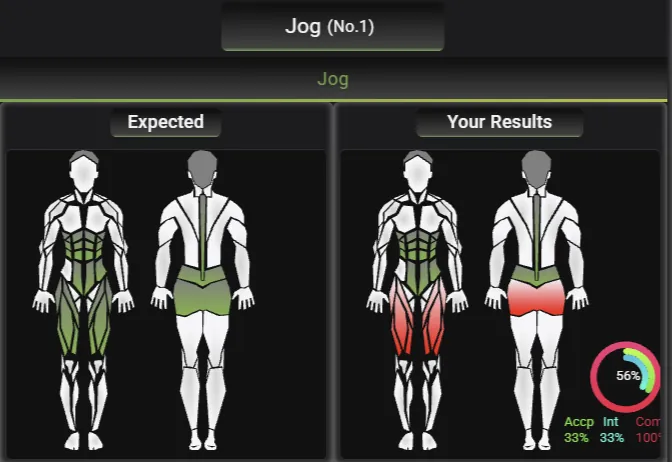
Our engineers build and run real-time computer-vision AI in production on our own fitterlyfe platform. Shown: body maps from a sample workout summary.
Applied deep tech division
AI-first engineering. Mission-critical systems. Licensable technology.
We take AI from strategy to production, then secure, accelerate and harden the platforms it runs on. Each capability is packaged as a licensable SDK that your team owns, extends and deploys.
Why fitterlyfe
Our engineers build and run real-time computer-vision AI in production on our own fitterlyfe platform, and bring that same discipline to your models, data and infrastructure.
We take AI from pilot to production, harden application stacks from the first release, and design security in from the first architecture review.
Every capability ships as a licensable SDK that your team owns, extends and deploys, with white-label rights to ship it under your own brand.
Technology capabilities
AI engineering, cybersecurity and encryption, video streaming, application stacks and embedded systems, each delivered as a licensable SDK that your team owns, extends and deploys.
AI consulting and engineering
We define where AI creates measurable value in your business, then design, build and operate the systems that deliver it. Our engineers build and run real-time computer-vision AI in production on our own fitterlyfe platform. We bring that same discipline to your models, data and infrastructure.
We prioritize use cases by business value, feasibility and risk, and set success metrics and a return-on-investment baseline before any build starts.
We audit data quality, lineage and access, and build ingestion, labeling and feature pipelines that are fit for training and inference.
We evaluate foundation, open-weight and custom models against your accuracy, latency, cost and data-residency requirements, then fine-tune or build retrieval-augmented generation (RAG) as needed.
Tool-using agents and workflow automation with human-in-the-loop approval, scoped permissions and full audit trails.
Quantized, hardware-accelerated models for browsers, mobile and embedded devices, for low latency, offline operation and data that stays on the device.
Versioned datasets and models, CI/CD for models, evaluation gates, drift monitoring and cost observability across the model lifecycle.
Adversarial testing for prompt injection, data leakage, insecure output handling and model abuse, aligned with the OWASP Top 10 for LLM Applications.
Risk assessment, model documentation, bias evaluation and access controls, aligned with the NIST AI Risk Management Framework and ISO/IEC 42001.
Production models, inference runtimes and evaluation harnesses ship as a licensable SDK, integrated into your products and pipelines. Licensing model
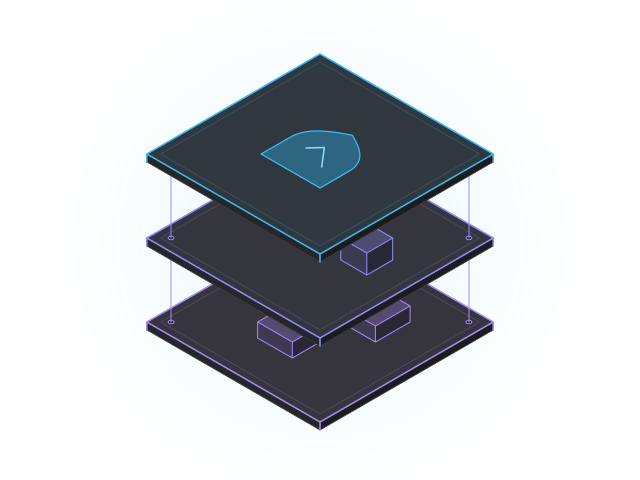
Encryption and platform optimization
We secure data across its full path, from client to service to storage, and engineer the platform for predictable latency, throughput and availability under load. Our security architecture follows defense-in-depth and zero-trust principles.
TLS 1.3 and mutual TLS in transit, AES-256-GCM at rest, and application-layer end-to-end encryption, so that intermediaries never see plaintext.
Key generation, rotation and revocation through HSM- or KMS-backed key management, with envelope encryption and strict separation of duties.
WAF deployment and tuning with OWASP Core Rule Set protections against the OWASP Top 10, plus virtual patching, rate limiting, and bot and DDoS mitigation.
Schema validation, strong authentication (OAuth 2.0 / OIDC), request signing and abuse detection, aligned with the OWASP API Security Top 10.
Identity-aware access, least-privilege service accounts, network micro-segmentation and continuous verification.
Profiling, load and soak testing, caching strategy and query optimization to meet defined latency and throughput targets.
Redundant, horizontally scalable architecture with health checks, automated failover and tested backup and recovery procedures.
Controls engineered to align with ISO/IEC 27001 and PCI DSS v4.0 (including requirement 6.4.2 for public-facing web applications), with audit-ready logging.
Encryption, key-management and secure-transport components ship as a licensable SDK for web, mobile and server platforms. Licensing model
VOD tech stack
We build complete video-on-demand stacks covering ingest, transcoding, packaging, encryption, license delivery and playback. Content is protected by industry-standard multi-DRM. Performance-critical client code runs as WebAssembly, so playback is fast and consistent on every modern browser. The same stack protects premium content on fitterlyfe.
Google Widevine, Microsoft PlayReady and Apple FairPlay from a single encrypted source, using Common Encryption (CENC, cenc and cbcs schemes).
HLS and MPEG-DASH with CMAF packaging and adaptive-bitrate ladders tuned to your content and audience networks.
Playback through W3C Encrypted Media Extensions (EME), with no plug-ins, on desktop and mobile browsers.
Demuxing, decryption-adjacent processing, analytics and AI inference compiled to WebAssembly, for consistent near-native performance in the browser.
Session-level watermarking that traces leaked content back to its source.
Token-authenticated CDN URLs, license policies (rental, subscription, offline), geo-restriction and concurrent-stream limits.
Packaging, license-server integration and the WebAssembly player core ship as a licensable SDK. Licensing model
Hybrid and modern application stacks
We deliver one codebase that ships to the web, Android and iOS. It is installable, works offline and is fast on any network. The stacks we build are hardened for production from the first release.
Progressive web apps, with hybrid native shells where app-store distribution or native device APIs are required.
Service-worker caching strategies, background sync and local data stores, so the app keeps working on poor or intermittent networks.
Web app manifest, install prompts, push notifications and an app-like experience on home screens and desktops.
Server-side rendering or static generation, code splitting, and image and video optimization, measured against Core Web Vitals targets.
Content Security Policy, secure headers, Subresource Integrity and dependency scanning, behind a WAF.
Automated builds, tests and releases, with real-user monitoring and error tracking in production.
Application shells, offline-sync and UI component libraries ship as a licensable SDK. Licensing model
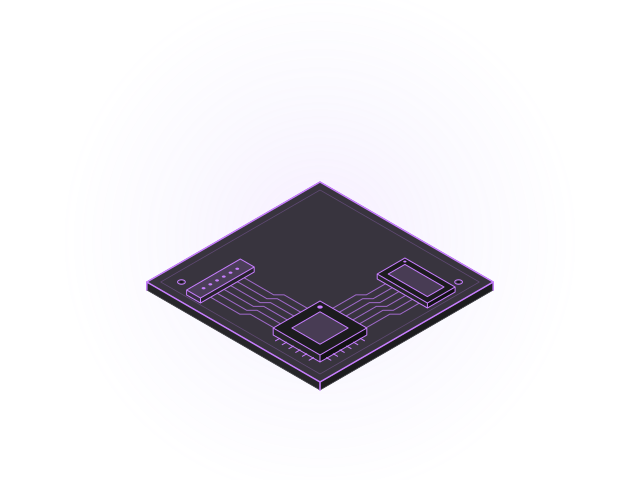
Custom OS porting
We bring custom hardware to production with operating systems that are secure, deterministic and maintainable. Our work spans board bring-up through to signed field updates. We engineer for the security and reliability requirements of mission-critical deployments.
Bootloader, kernel and board support packages for custom ARM, RISC-V and x86 hardware.
Embedded Linux builds with Yocto Project or Buildroot, and real-time operating system ports where hard deadlines apply.
Drivers for custom peripherals, sensors, displays, cameras and accelerators, including NPUs and GPUs for on-device AI.
Hardware root of trust, verified boot, encrypted storage and TPM or secure-element integration.
Atomic A/B updates with cryptographic signing and automatic rollback, for fleets in the field.
Minimal attack surface, kernel hardening and real-time tuning, engineered to align with IEC 62443 for industrial systems.
BSPs, drivers and the update framework ship as a licensable SDK, with long-term maintenance. Licensing model
Inside our technology
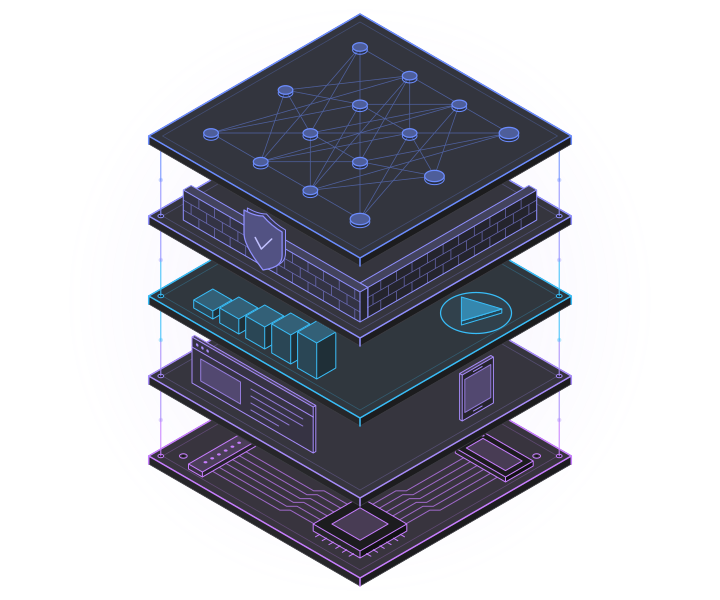
Simplified views of the AI lifecycle, defense-in-depth security, the video-on-demand pipeline and the embedded platform, drawn only from the components each capability delivers.
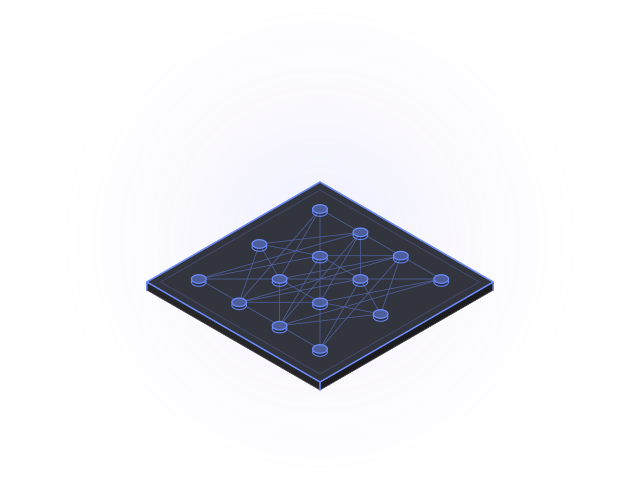
Data pipelines feed model customization and evaluation gates, then private or edge deployment, with AI security and governance across the model lifecycle.
AI security
Governance
Data is protected across its full path, from client to service to storage, with zero-trust identity, managed keys and audit-ready logging.
Zero-trust identity
Key management
Logging and monitoring
Content is packaged for adaptive streaming, protected by multi-DRM from a single encrypted source and played in the browser through a WebAssembly player core.
License delivery
Forensic watermarking
WebAssembly acceleration
A hardware root of trust anchors verified boot, a secure and maintainable operating system and on-device AI, kept current by signed, atomic updates.
Signed OTA updates
Hardening and determinism
Technology in action
Our real-time computer-vision AI runs in production on the fitterlyfe platform. Demos, architecture examples, case studies and metrics will be published here as they become available.
From the fitterlyfe product
Our engineers build and run real-time computer-vision AI in production on our own fitterlyfe platform. Shown: body maps from a sample workout summary.
Hands-on demos of our SDKs will be published here. None are available yet.
Worked architecture examples for each capability will be published here. None are available yet.
Case studies will be published here. None are available yet.
Measured performance results will be published here. No metrics are available yet.
Security by design
Every system we deliver is protected in layers, from the edge to the device. We design security in from the first architecture review, rather than adding it after release.
OWASP Core Rule Set protection at the edge. Specifications: see Cybersecurity and encryption.
See the capabilityEncryption in transit and at rest, with managed keys. Specifications: see Cybersecurity and encryption.
See the capabilityZero-trust access, least-privilege roles, multi-factor authentication and audit logging.
Threat modeling, static and dynamic analysis (SAST/DAST), software bills of materials (SBOMs) and dependency scanning in CI.
Centralized logging, alerting and documented incident-response runbooks.
Controls engineered to align with OWASP, NIST and ISO/IEC 27001 practices.
Integration stack, top to bottom: your product embeds fitterlyfe SDK modules, which run in your deployment environment.
Your product
Your team owns, extends and deploys the integration, under your own brand.
fitterlyfe SDKs
Your deployment
Licensable technology and SDK model
Every capability ships as a licensable SDK, so you embed proven components instead of rebuilding them.
Embed proven components in your products instead of rebuilding them.
Ship under your own brand, inside your own products.
You license the SDK, and we provide updates, patches and support.
Our engineers support your team through integration, performance tuning and go-live.
On-premises, private cloud or air-gapped environments.
Semantic versioning, changelogs and documented upgrade paths, with ongoing vulnerability remediation and dependency updates.
Engineering engagement model
We review your goals, architecture, data and threat model.
We set the target design, success metrics and security controls.
We build iteratively, with security testing at every stage.
Our engineers support your team through integration into your products and pipelines, and through performance tuning.
We support go-live in your deployment model: on-premises, private cloud or air-gapped environments.
We maintain the core with updates, security patches and support for the SDK you license.
Our engineers start by reviewing your goals, architecture, data and threat model.